
Geography: Importance, Branches, Physical Features and Geography of India
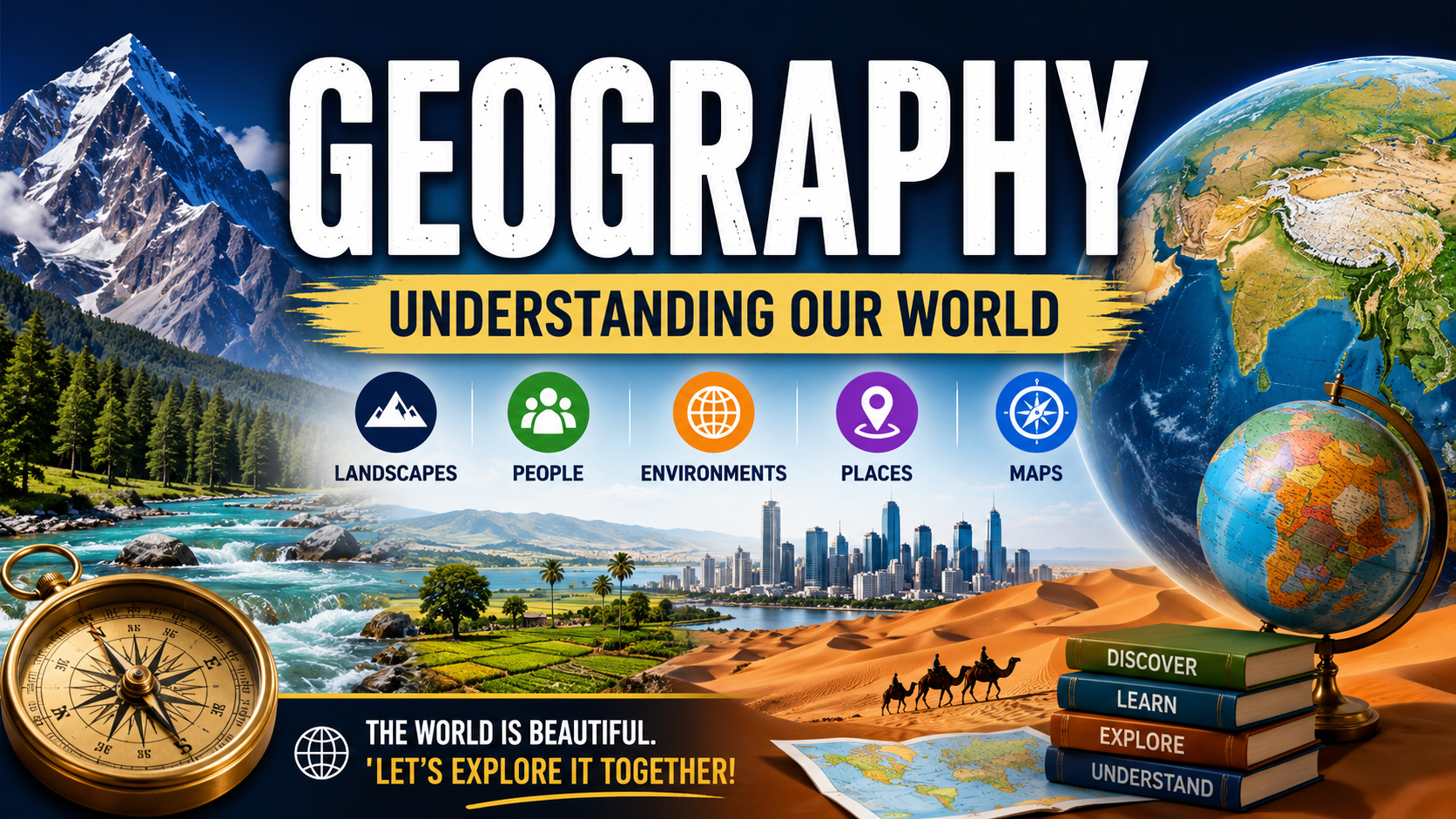
Geography is the scientific study of the Earth, its landforms, climate, natural resources, and the relationship between people and their environment. It helps us understand how physical features and human activities shape the world around us. Geography plays an essential role in education, environmental conservation, disaster management, agriculture, urban planning, and economic development.
Importance of Geography
- Helps us understand Earth’s physical and human environments.
- Supports environmental conservation and sustainable development.
- Improves disaster preparedness and management.
- Assists in agriculture, transportation, and urban planning.
- Explains weather, climate, and natural resources.
- Develops knowledge about different countries, cultures, and ecosystems.
- Essential for competitive examinations such as UPSC, SSC, Banking, Railways, and State PSC.
Branches of Geography
| Branch | Description |
|---|---|
| Physical Geography | Studies landforms, climate, rivers, mountains, soils, and natural processes. |
| Human Geography | Focuses on population, settlements, culture, economy, and human activities. |
| Economic Geography | Studies industries, trade, agriculture, transportation, and resource distribution. |
| Political Geography | Examines political boundaries, countries, and international relations. |
| Environmental Geography | Studies interactions between humans and the environment. |
| Regional Geography | Focuses on the geographical characteristics of specific regions. |
Major Physical Features of the Earth
- Mountains
- Plateaus
- Plains
- Deserts
- Rivers
- Lakes
- Oceans and Seas
- Valleys
- Forests
- Islands
Physical Features of India
India is a diverse country with varied physical landscapes. The country is divided into six major physiographic divisions.
| Physical Division | Description |
|---|---|
| The Himalayan Mountains | The youngest and highest mountain range in the world. It protects India from cold winds and is the source of many rivers. |
| Northern Plains | Extremely fertile plains formed by the Indus, Ganga, and Brahmaputra rivers. |
| Peninsular Plateau | The oldest landmass of India, rich in minerals and surrounded by hills. |
| Indian Desert | The Thar Desert located mainly in Rajasthan, characterized by sandy terrain and low rainfall. |
| Coastal Plains | Stretch along the Arabian Sea and Bay of Bengal with fertile agricultural land and important ports. |
| Islands | Andaman & Nicobar Islands in the Bay of Bengal and Lakshadweep Islands in the Arabian Sea. |
Geography of India
| Feature | Details |
|---|---|
| Total Area | 3,287,263 sq km |
| Largest State | Rajasthan (by area) |
| Smallest State | Goa |
| Capital | New Delhi |
| Latitude | 8°4’N to 37°6’N |
| Longitude | 68°7’E to 97°25’E |
| Northernmost Point | Indira Col |
| Southernmost Point (Mainland) | Kanyakumari |
| Southernmost Point of India | Indira Point (Andaman & Nicobar Islands) |
| Longest River | Ganga |
| Highest Peak in India | Kangchenjunga (8,586 m) |
| Longest Coastline State | Gujarat |
Major Rivers of India
- Ganga
- Yamuna
- Brahmaputra
- Godavari
- Krishna
- Narmada
- Tapti
- Mahanadi
- Kaveri
- Indus
Climate of India
India experiences a tropical monsoon climate. The four main seasons are:
- Winter Season (December-February)
- Summer Season (March-May)
- Southwest Monsoon Season (June-September)
- Retreating Monsoon Season (October-November)
Why Geography is Important for Competitive Exams
- Frequently asked in UPSC, SSC, Banking, Railways, and State PSC examinations.
- Improves understanding of current affairs related to climate, environment, and disasters.
- Helps solve map-based questions.
- Strengthens General Studies preparation.
- Provides knowledge useful for interviews and group discussions.
Conclusion
Geography is one of the most important branches of knowledge because it explains the relationship between humans and the environment. Understanding India’s physical features, climate, rivers, mountains, and natural resources helps students appreciate the country’s diversity while preparing effectively for academic studies and competitive examinations. A strong foundation in geography also promotes environmental awareness and responsible citizenship.



Leave a Reply