
Science and Technology: Shaping the Future of Humanity
Science and technology have transformed the way we live, work, and communicate. From smartphones and artificial intelligence to space exploration and medical discoveries, technological progress has made life more convenient and connected. Every day, scientists and engineers develop new solutions to solve global challenges and improve human well-being.
What Is Science?
Science is the systematic study of the natural world through observation, experimentation, and evidence. It helps us understand how things work, from tiny atoms to distant galaxies. Major branches of science include Physics, Chemistry, Biology, Earth Science, and Astronomy.
What Is Technology?
Technology is the practical application of scientific knowledge to create tools, machines, and systems that solve problems. It includes everything from simple inventions like the wheel to advanced innovations such as robots, satellites, and quantum computers.
Major Advances in Science and Technology
Artificial Intelligence (AI)
AI enables computers to perform tasks that usually require human intelligence, including language translation, image recognition, and decision-making. AI is now used in education, healthcare, finance, and transportation.
Space Exploration
Space agencies continue to explore the Moon, Mars, and beyond. Satellites provide weather forecasts, GPS navigation, communication services, and environmental monitoring.
Medical Innovations
Modern medicine has benefited from technologies such as robotic surgery, telemedicine, wearable health devices, and advanced vaccines. These innovations help diagnose and treat diseases more effectively.
Renewable Energy
Solar panels, wind turbines, and hydroelectric power plants are reducing dependence on fossil fuels and helping combat climate change.
Robotics and Automation
Robots assist in manufacturing, agriculture, healthcare, and disaster response. Automation improves productivity while reducing repetitive tasks.
Importance of Science and Technology
Improves healthcare and increases life expectancy.
Enhances education through digital learning.
Boosts communication across the world.
Supports economic growth and innovation.
Helps protect the environment through sustainable technologies.
Advances scientific research and exploration.
Challenges
Despite its benefits, science and technology also present challenges:
Data privacy and cybersecurity risks.
Ethical concerns surrounding artificial intelligence.
Job displacement due to automation.
Environmental impact from electronic waste.
The spread of misinformation through digital platforms.
Responsible innovation and ethical use of technology are essential for addressing these challenges.
Conclusion
Science and technology continue to shape the future of humanity. They improve our quality of life, expand our knowledge, and provide solutions to complex global problems. By promoting scientific thinking, innovation, and responsible use of technology, we can build a smarter, healthier, and more sustainable world.
Key Facts
World Science Day for Peace and Development: 10 November
National Technology Day (India): 11 May
AI stands for Artificial Intelligence.
NASA and ISRO are leading space agencies.
Renewable energy sources include solar, wind, hydro, geothermal, and biomass.
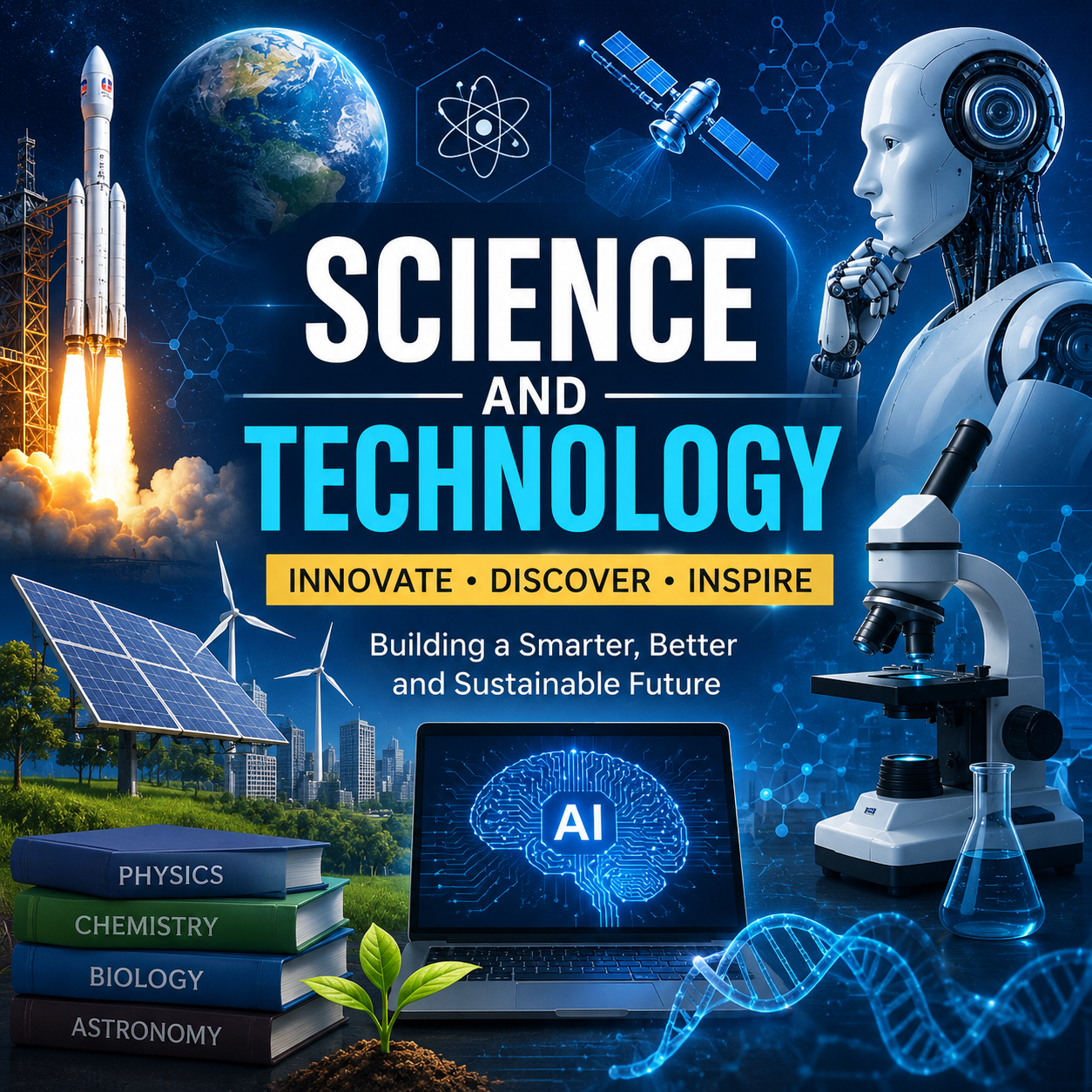
Science and Technology: Importance, Innovations, Benefits and Future
Learn about science and technology, their importance, major innovations, benefits, challenges, and how they are shaping the future of humanity.



Leave a Reply